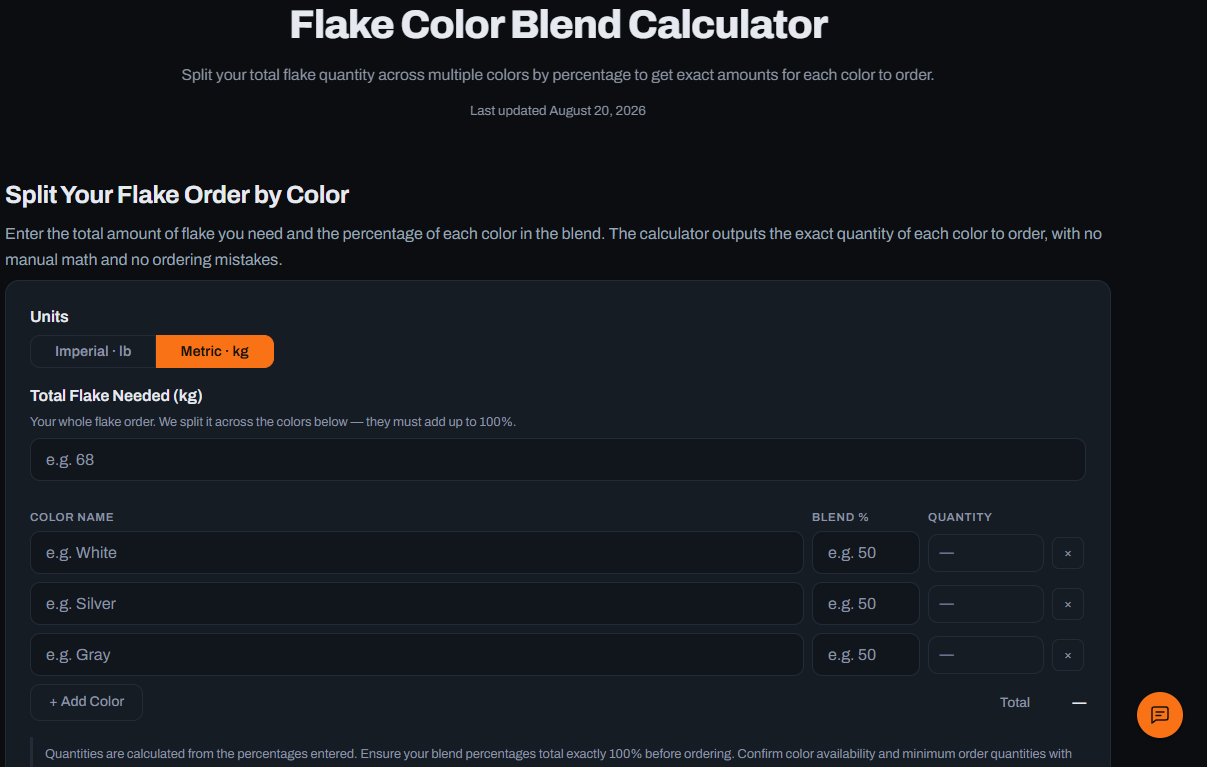

A contractor using a flake color blend calculator can avoid a common decorative-flooring mistake: ordering the right total amount of flake but the wrong quantity of each color. Full-broadcast systems look simple once finished, yet planning depends on floor area, broadcast rate, color percentages, coating coverage, package sizes, waste, and installation method.
Material estimating works best when every component is calculated separately. Base coat, decorative flake, topcoat, repairs, and preparation materials all behave differently, so one broad square-foot number cannot describe the entire job.
Measure the Floor Before Splitting the Blend
The first calculation should be the actual floor area. Irregular garages, workshops, or commercial rooms can be divided into simple rectangles and then combined into one total.
An epoxy coverage calculator can then translate that area into coating volume using the product’s stated coverage rate and number of coats. The figure should still be checked against the current technical data sheet because products can have different spread rates and film-build requirements.
Work Out the Total Flake Quantity First
Color percentages only make sense after the total broadcast quantity is known. A full-flake floor may use much more material than a light decorative scatter, so the broadcast specification should be clear before the blend is divided.
Once total flake weight is established, each color can be calculated from its percentage. A four-color blend should add back to 100 percent, and every quantity should be checked before ordering.
This prevents an important color from running short halfway through the floor.
Account for Package Sizes
The mathematical quantity is rarely the exact amount contractors can purchase. Decorative flake comes in fixed package sizes, so orders often need to be rounded up.
That extra material can help maintain broadcast coverage, cover small measurement changes, or provide a reserve for future repairs. Excessive over-ordering, however, ties up money and storage space.
Keep Blend Consistency Across the Job
Large floors can show variation if crews scoop colors unevenly from separate containers. Pre-blending the required colors thoroughly before broadcast can help create a more consistent appearance.
On larger projects, contractors may divide the total blend into smaller batches while maintaining the same percentage in each batch. If multiple boxes are required, combining them before application can also reduce visible differences.
Calculate Base Coat and Flake Together
The broadcast layer depends on the base coat remaining suitable for flake application. Contractors therefore need enough resin to cover the floor at the specified rate without stretching material too thin.
A porous or heavily profiled slab can consume more coating than a dense surface. Repairs and edges may also affect actual usage.
Estimating base coat and flake as connected stages helps prevent having enough decorative media on site but too little resin to complete the broadcast.
Do Not Forget the Topcoat
A full-broadcast flake floor normally needs a clear protective coat over the decorative layer. The texture left after scraping and vacuuming can affect how much topcoat is required.
Coverage should come from the specific product data rather than a generic assumption. Contractors should also confirm whether one or more clear coats are specified and whether texture additives will be used.
Topcoat shortages can be disruptive because the floor may already be inside a limited recoat window.
Use Waste Factors Deliberately
Every job includes some loss through mixing containers, rollers, edges, broadcast outside the floor, or residue that cannot be recovered.
A waste allowance should be based on the system and crew experience rather than one fixed number. Recording actual usage after completed jobs can gradually improve future estimates.
Review the Numbers Before Ordering
Before materials are purchased, check floor area, broadcast rate, color percentages, epoxy coverage, package sizes, topcoat requirements, and waste allowance together.
A mistake in the first measurement can affect every later quantity, while an incorrect blend percentage can create a visual problem even when total weight is correct.
A short final review is often cheaper than an emergency material run after installation has started.
Conclusion
Decorative flake flooring is easier to estimate when the system is broken into clear calculations instead of treated as one square-foot price. Floor area, coating coverage, total flake weight, color percentages, package sizes, topcoat volume, and waste all need separate attention.
Contractors who plan these quantities before ordering can reduce shortages, control excess material, and keep color blends more consistent across the floor. Accurate estimating also gives the crew a smoother workflow from the first base coat through the final clear finish.