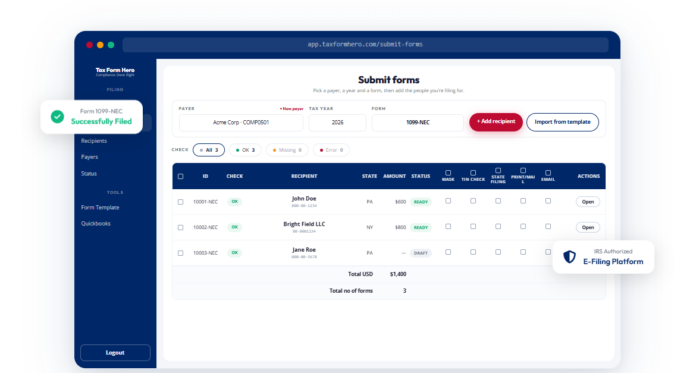

What you’re buying when you choose e-filing
Choosing an IRS-authorized e-filing option is not just about getting a submission sent—it’s about ensuring the forms are prepared in the format the IRS can process and that recipient copies are handled correctly. A good buyer-intent setup also explains the difference between filing for compliance and simply generating a PDF for your records.
Many businesses compare features like bulk import, automated formatting, and status tracking, but the real purchase value is reduction in rework. If your organization covers multiple locations or has a mix of full-time employees and other covered individuals, you’ll want a workflow that reduces manual entry and standardizes the data fields. Buyer-friendly services also clarify the documentation you should keep for audits, including how they help you preserve a clean audit trail from preparation through acceptance.
How to verify the provider supports the forms you need
A reliable online platform should support the exact filing types your business must handle, not just “tax forms in general.” For many companies, 1095-C reporting happens alongside other common employer documents, so buyers typically want one workflow that can span 1099 online filing service multiple form types.
It’s also important to confirm how the platform handles recipient delivery expectations. Even when you file electronically, recipient copy handling can still be a critical step for compliance and recordkeeping. When you evaluate options for file 1099 misc online, check whether the service includes guidance for name/TIN formatting, business rules for common data issues, and clear instructions for resolving rejects or correction cycles.
Buyer checklist: features that prevent costly filing mistakes
Before you pay for any filing service, verify that the platform includes validation that catches common problems before transmission. Good tools flag missing identifiers, inconsistent formatting, and mismatched data structures that often trigger delays. If you’re managing a growing vendor roster, the ability to update records and re-submit corrected versions efficiently matters just as much as the initial e-file process.
Another buying factor is transparency around acceptance status and post-filing access. A strong service should provide a clear confirmation trail that shows what was accepted, what needs attention, and what’s available for your internal documentation. If you’re planning 1099 e file workflows alongside 1095-C submissions, choose a provider with consistent dashboards, predictable file naming conventions, and straightforward retrieval of filed copies for your compliance binder.
Conclusion
The best buyer-intent approach is to treat your e-filing purchase like a compliance system, not a one-time upload. With taxformhero.com, teams can handle electronic filing for employment tax documents alongside other common filings, helping streamline federal and state reporting obligations while keeping documentation organized. If you’re weighing multiple options, focus on how quickly you can move from data entry to accepted submissions, and how confidently you can resolve issues if anything is flagged. A service that emphasizes guided preparation, clear status updates, and consistent record access can make compliance feel less like guesswork. For many organizations, using taxformhero.com becomes a practical way to manage e-filing responsibilities in a single, coordinated workflow.