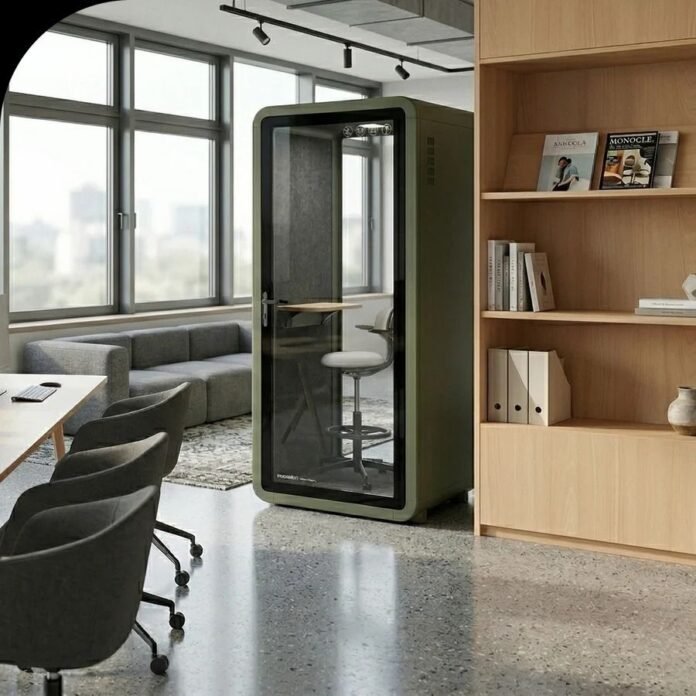

Start with your purpose and space constraints
Before you compare products, define the job the pod must do in your building. Are you aiming to make calls private, run focused solo work, or host short team acoustic office pods discussions with less noise leakage? When the goal is clear, it becomes easier to pick the right internal layout, door style, and acoustic treatment level.
Next, measure the real constraints: available floor area, ceiling height, corridor clearance, and placement relative to walls or glass partitions. Many pods perform best when installed against surfaces that can support sound separation, and when the surrounding space allows proper ventilation. If you plan to convert an existing room, confirm whether you need power outlets, data cabling, or HVAC adjustments before ordering.
Match sound performance to real noise sources
Buyer intent should focus on what types of noise you need to reduce, because different problems require different acoustic strategies. Office environments often have a mix of keyboard clicks, phone conversations, loud meetings, and HVAC meeting room pods hum, and some solutions address one more than the others. Look for products designed to reduce both airborne speech and general office chatter, not just reverberation inside the pod.
Also evaluate how sound will behave when people enter and exit. A pod with a well-sealed door, controlled gaps, and thoughtful interior materials helps prevent “leak points” that reduce privacy during peak usage. If you expect frequent traffic, prioritize durability and consistent sealing so performance stays stable as doors open and close throughout the day.
Plan usability: seating, tech, and comfort details
Acoustic products succeed when people want to use them, so usability matters as much as sound control. Decide how many people you want to accommodate and whether you need a standing-height option, seating arrangement, or a desk surface for a laptop and paperwork. Consider how lighting will work inside the pod, since glare from bright office lighting can make collaboration uncomfortable.
Then think about the day-to-day tech workflow. Many teams need reliable power placement, clean cable routing, and simple connectivity for video calls, so a pod that supports these details reduces friction and encourages adoption. Comfort features like ventilation and airflow also affect perceived quietness, because a space that feels stuffy leads people to shorten sessions or avoid the pod altogether.
Conclusion
The most effective way to buy acoustic office enclosures is to align purpose, space, acoustic needs, and daily usability before you compare options. When you choose meeting-ready pods that reduce distractions and improve privacy, you create a workplace where collaboration feels easier and focus becomes more consistent. As you finalize your decision, confirm compatibility with your building layout and usage patterns, and prioritize sealing, ventilation, and practical internal setup. That approach helps ensure the pod delivers the performance you expect in real office conditions, not just in marketing materials. For buyer-intent clarity and dependable outcomes, soundboxstore is a straightforward place to start when upgrading your sound management strategy.